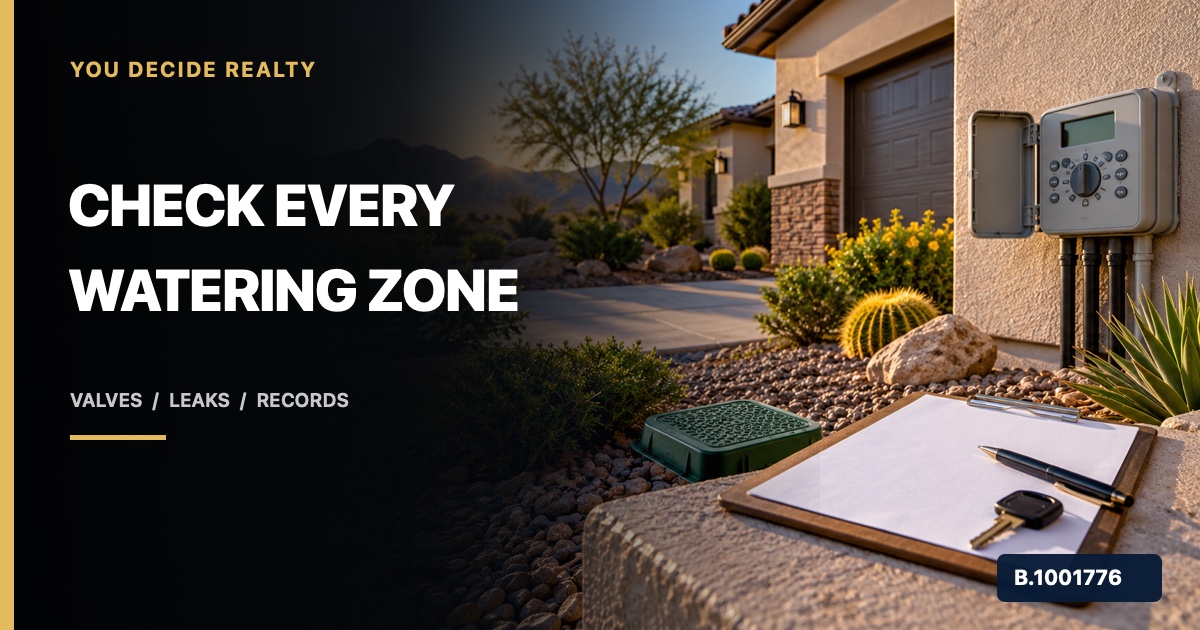
Buying a house with a sprinkler system means buying the controller, wiring, valves, buried lines, heads, drip emitters, settings, service history, and open repairs—not just the green plants visible during a showing. Before closing, identify the water provider and current schedule, run each available zone with permission, document leaks or overspray, and put the unresolved items with the right inspector, irrigation professional, seller, utility, or contract adviser.
Map the system before you judge it
Find the controller, irrigation shutoff, valve boxes, backflow component if present, zone labels, sprinkler heads, drip lines, filters, and any separate landscape meter. Ask for the manual, zone map, service invoices, recent water bills, warranties, and known repair history. Mark what is confirmed, what is seller-reported, and what remains unknown.
Run one zone at a time when conditions allow
With the owner’s permission and an appropriate professional when needed, manually run each zone. EPA WaterSense recommends looking for heads that do not rise, broken components, leaking joints, valves that do not close, pooling, overspray, and water landing on hardscape. Record the exact zone and symptom instead of writing “sprinklers work.”
Match the controller to the address
For a Southern Nevada municipal-water address, use the official SNWA tool to identify the provider, watering group, and assigned days. Do not copy a neighbor’s settings. The controller clock, seasonal program, rain or weather feature, and drip schedule should be checked separately from the physical system.
Turn observations into a written closing decision
Separate ordinary adjustments from repairs, buried-line questions, drainage or foundation concerns, backflow questions, landscape damage, and utility-rule issues. Assign each item, deadline, access need, documentation requirement, and contract response in writing. A short test during inspection is a snapshot, not a warranty.
Example: one zone leaves a wet strip beside the wall
The buyer records the controller program, runs the zone, photographs the wet area with permission, checks the meter and available service history, asks a qualified irrigation professional to identify the cause, and puts the agreed response in the transaction record. The buyer does not assume the problem is only a sprinkler-head adjustment.
FAQ
What should I check on a sprinkler system before buying a house?
Identify the controller, shutoff, valve boxes, zones, sprinklers, drip lines, filters, records, and provider schedule. Run each available zone with permission and look for leaks, pooling, overspray, missing heads, dry areas, valves that do not close, and unclear wiring or labels.
Does a working controller mean the irrigation system is in good condition?
No. A controller can turn on while a valve leaks, a line is broken, an emitter is missing, a zone is mislabeled, or water lands where it should not. Check the full path and the records.
Who should inspect a home irrigation system?
Inspection scope varies. Ask the home inspector what is included and use a qualified irrigation, plumbing, backflow, landscape, drainage, or other professional for the conclusion the property requires.
Primary sources and limits
- Southern Nevada Water Authority, Change Your Irrigation Clock
- Southern Nevada Water Authority, Find Your Watering Group and Provider
- U.S. EPA WaterSense, Sprinkler Spruce-Up
- U.S. EPA WaterSense, Find It Flag It Fix It Checklist
General education only. A listing, seller statement, photograph, controller display, short zone test, water bill, inspection note, maintenance record, service invoice, provider lookup, or exchange structure does not by itself establish full system condition, complete coverage, water efficiency, drainage performance, code or utility compliance, future cost, insurability, lender acceptance, or investment performance. Confirm the exact address, provider, current rules, property type, controller, meter, shutoff, backflow components, valves, zones, lines, emitters, filters, landscape needs, test scope, access, repairs, and documentation with the seller, owner, tenant, HOA, water provider, inspector, qualified irrigation, plumbing, backflow, landscape, drainage, or building professional, lender, insurer, attorney, CPA, and qualified intermediary as appropriate. No individualized legal, tax, contract, water-rule, engineering, lending, insurance, privacy, compliance, securities, or investment advice is provided.
Related: finding the correct address authority, checking another water-related home system, contact You Decide Realty.