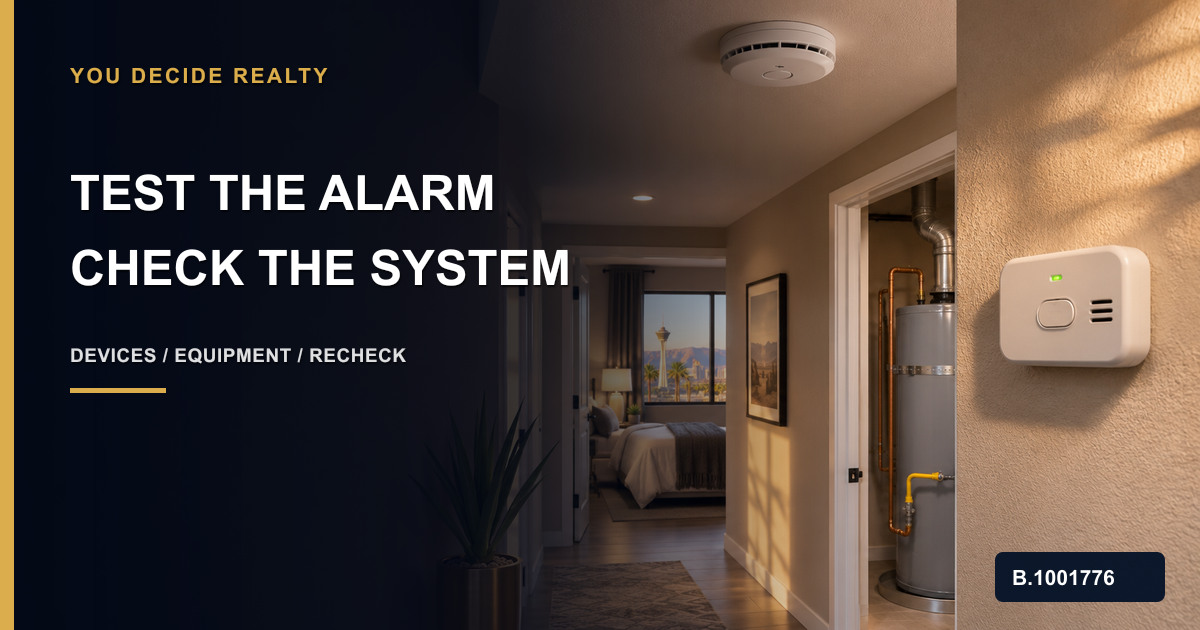
A carbon monoxide detector when buying a house should be treated as a system to verify, not a box to notice during a walkthrough. Identify every smoke and carbon-monoxide alarm, read the manufacture or replacement date where available, compare placement with current manufacturer and local requirements, test through the proper procedure, and have fuel-burning equipment, fireplaces, vents, and an attached garage evaluated by qualified professionals. A green light or test beep does not prove that the sensor is accurate, correctly located, or appropriate for the property.
Map the devices and the possible carbon-monoxide sources
Walk the property with a simple floor plan. Mark each smoke alarm, carbon-monoxide alarm, combination device, bedroom, sleeping-area hallway, level, garage connection, furnace, fireplace, water heater, range, and other fuel-burning equipment. Note missing devices, painted or covered openings, disconnected units, chirps, damage, and devices hidden by furniture or drapes. CPSC recommends CO alarms on every level and outside sleeping areas, but the exact code and installation decision should be checked for the property and device.
Read dates and instructions instead of guessing from appearance
Photograph the model, manufacture date, replacement date, power type, battery-backup status, and any end-of-life indicator that can be read without removing or altering the seller's equipment. CPSC says alarm life varies and newer CO alarms may provide an end-of-life signal. Obtain the manufacturer instructions for the exact model. A clean housing does not establish remaining sensor life, and a test button usually checks circuitry rather than sensor accuracy.
Separate alarm testing from combustion-system inspection
Clark County Fire recommends annual service of heating systems, water heaters, and other gas, oil, or coal-burning appliances. Ask the appropriate inspector or qualified technician to evaluate visible equipment, venting, combustion air, fireplace condition, and relevant safety concerns within the agreed scope. Do not use an alarm as a substitute for equipment maintenance, and do not run a vehicle in an attached garage, use an oven for heat, or operate fuel-burning equipment contrary to instructions as a test.
Put repairs, access, and recheck dates in writing
If the parties negotiate installation, replacement, service, or repair, identify the exact device or system, responsible party, acceptable documentation, completion deadline, access, and reinspection or final-walkthrough step. Preserve receipts, technician records, permits when applicable, model information, and photographs. Contract remedies and credits require file-specific brokerage and legal guidance; an inspection observation is not a completed repair.
Recheck the safety file before possession
At the final walkthrough, confirm that agreed devices remain installed, power indicators are normal, batteries or backups are present as applicable, completed work matches the written agreement, and no new chirp or warning is visible or audible. After possession, follow manufacturer testing and replacement instructions and establish a household response plan. If an alarm sounds, leave the home and follow emergency guidance rather than searching for the source while exposed.
FAQ
Does a test beep prove a carbon monoxide alarm is working correctly?
Not completely. CPSC says the test button checks whether circuitry is operating; it does not verify sensor accuracy. Device age, placement, instructions, end-of-life signals, power, and the condition of fuel-burning equipment still matter.
Should a home buyer replace every smoke and CO alarm?
That is property- and device-specific. Verify age, model instructions, condition, code context, inspection findings, and any seller agreement before deciding. Use a qualified professional when the installation or equipment condition is uncertain.
What should I do if a carbon monoxide alarm sounds?
Leave the home immediately and follow local emergency guidance, including calling 911 when directed. Do not remain inside to identify the source. Qualified responders and technicians should determine when reentry and equipment evaluation are safe.
Primary sources and limits
- Clark County Fire Department, Cold Weather Winter Safety
- Clark County Fire Department, Carbon Monoxide Safety
- U.S. Consumer Product Safety Commission, Keep Warm and Safe This Winter
- U.S. Consumer Product Safety Commission, Carbon Monoxide Fact Sheet
- Nevada Office of Emergency Management, Home Safety Hazards
General education only. An alarm, test button, indicator light, photograph, seller statement, inspection observation, invoice, repair request, work order, permit, license lookup, referral, exchange agreement, identification notice, or closing record does not by itself establish sensor accuracy, safe equipment, code compliance, completed repair, insurance coverage, lender approval, property suitability, professional acceptance, exchange qualification, basis, gain, deferral, or closing. Verify the exact property, jurisdiction, use, building and fire requirements, manufacturer instructions, device model and age, power, placement, fuel-burning systems, garage, inspection scope, technician findings, repairs, permits, insurance, lender conditions, leases, tenant notices, taxpayer, vesting, QI controls, exchange dates, receiving license, client consent, secure channel, accepted scope, owner, and completion evidence with the responsible broker, local authorities, fire department, inspectors, qualified technicians, insurer, lender, property manager, qualified intermediary, CPA, attorney, title or escrow provider, and other qualified advisers. No individualized legal, tax, lending, insurance, securities, appraisal, inspection, code, fire-safety, property-management, fair-housing, brokerage, or investment advice is provided.
Related: reviewing new-construction inspection checkpoints, separating radon testing from other indoor-air checks, contact You Decide Realty.