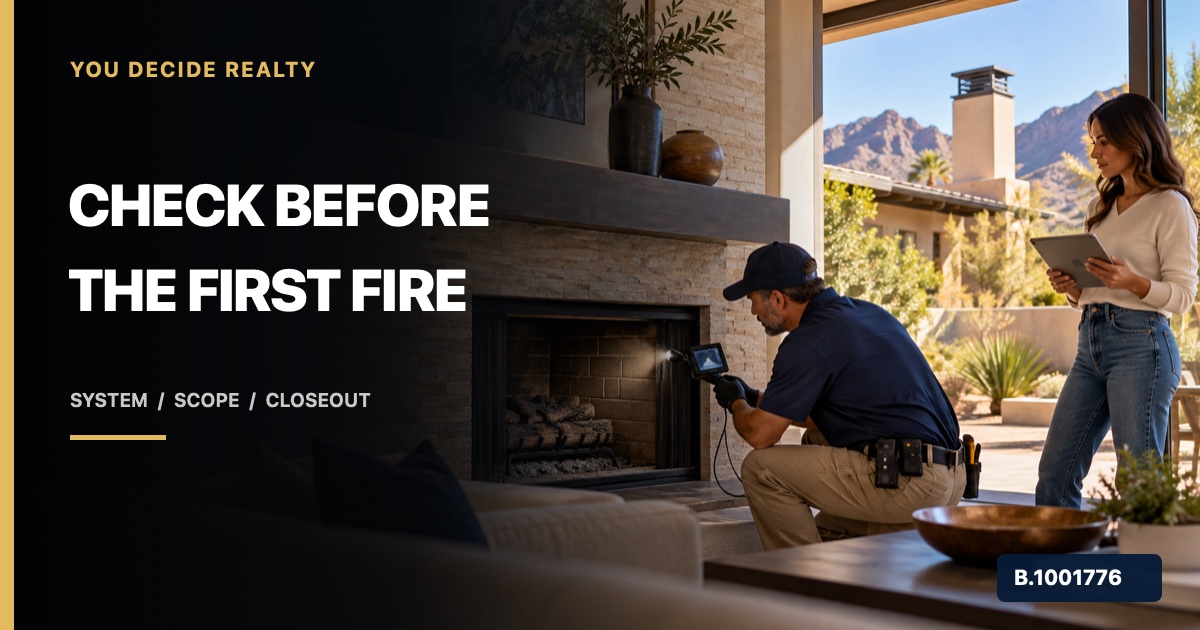
A fireplace inspection when buying a house should answer more than whether the feature looks attractive or produces a flame. Nevada inspection standards place fireplaces, flues, and chimneys within the certified inspector’s exterior-component scope, but the report is still limited to what is readily accessible and actually inspected. Before closing, identify the appliance and fuel type, preserve the observed condition and access limits, collect service and alteration records, and assign qualified follow-up for every unresolved venting, masonry, gas, electrical, insurance, or contract question.
Identify the exact fireplace system
Record whether the feature is wood-burning, gas-log, gas insert, pellet, electric, decorative, sealed, or intentionally decommissioned. Photograph the firebox, hearth, damper or controls, fuel shutoff when visible, vent or flue route, chimney exterior, cap, roof penetration, and surrounding finishes. Do not assume that a decorative appearance proves a working appliance, an approved conversion, or a safe vent path.
Define the inspection scope and access limits
Ask what the certified inspector observed from the room, exterior, roof, attic, crawlspace, or other accessible areas and what was not operated, opened, entered, or camera-scoped. Nevada rules require fireplaces, flues, and chimneys to be inspected as exterior components, but inaccessible or concealed conditions remain a separate question. A general inspection report is not automatically a specialized chimney, gas-appliance, masonry, or electrical evaluation.
Reconcile condition with records
Request available cleaning and inspection invoices, repair scopes, installation or conversion records, permits or approvals when applicable, manufacturer information, fuel-provider records, warranties, insurance correspondence, and seller disclosure. Match each document to the correct fireplace and date. A clean-looking hearth does not prove that the concealed flue, cap, liner, connections, or prior work has been evaluated.
Use current safety guidance as a first-use gate
Clark County and the U.S. Fire Administration advise annual chimney inspection and cleaning. Clark County also says the damper should be open so smoke and gases can escape and warns against using unvented stoves or fireplaces. Those public instructions support a cautious sequence: qualified review, documented cleaning or service as appropriate, confirmed venting, working alarms, cleared combustibles, and manufacturer-compliant operation before the first fire.
Turn every finding into a written owner
If the report notes cracked masonry, damaged firebox materials, staining, loose components, missing cap, questionable clearance, blocked or unverified flue, nonfunctional controls, fuel-line concern, or an unknown alteration, identify the qualified reviewer and contract deadline. Record any estimate, repair, reinspection, insurance, lender, title, HOA, or permit question without treating an article as the answer.
Example: the fireplace was not operated
The inspector documents a gas fireplace but does not operate it because the fuel supply is off and the listing information does not explain the service status. The buyer preserves the limitation, requests installation and service records, confirms who can safely activate and evaluate the system, checks insurance or contract dependencies, and obtains written closeout before deciding whether the feature is usable or simply present.
FAQ
Does a Nevada home inspection include the fireplace?
Nevada inspection rules include fireplaces, flues, and chimneys within the exterior-component scope, but the actual report is limited by access, condition, safety, and the agreed inspection. Confirm what was observed and what needs specialized follow-up.
Should a fireplace be inspected before buying a house?
A buyer should at least obtain a property-specific inspection record and understand its limits. Current Clark County and U.S. Fire Administration guidance supports annual professional chimney inspection and cleaning; the appropriate additional review depends on the system and findings.
Can I light the fireplace during a home showing?
Do not operate an unfamiliar fireplace without permission and a qualified safety basis. Confirm the fuel, controls, damper or venting, inspection status, manufacturer instructions, and any current restriction or service condition first.
Primary sources and limits
- Nevada Administrative Code Chapter 645D, Inspectors of Structures
- Clark County Fire Department, Cold Weather and Winter Safety
- Clark County Fire Department, Carbon Monoxide Safety
- U.S. Fire Administration, Heating Fire Safety
- Nevada Real Estate Division, Active Licensee Lists
General education only. A listing, seller statement, disclosure, photograph, inspection report, service invoice, cleaning record, flame test, repair, permit record, warranty, insurance record, or exchange structure does not by itself establish the appliance type, installation approval, full vent path, concealed condition, safe operation, code compliance, repair quality, future performance, coverage, contract outcome, or investment result. Confirm the exact property, appliance, fuel source, controls, shutoff or disconnect, firebox, hearth, damper or sealed vent, flue or chimney, cap, roof interface, access limits, cleaning and service history, alterations, alarms, manufacturer instructions, applicable restrictions, permits or approvals, qualified follow-up, contract response, reinspection, and first-use or operating closeout with the responsible seller, owner, tenant, HOA, inspector, fireplace or chimney professional, utility or fuel provider, qualified contractor, manufacturer, fire or building authority, title and escrow professionals, lender, insurer, attorney, CPA, and qualified intermediary as appropriate. No individualized legal, tax, contract, engineering, environmental, lending, insurance, privacy, compliance, securities, or investment advice is provided.
Related: coordinating smoke-alarm readiness, checking the chimney and roof interface, contact You Decide Realty.