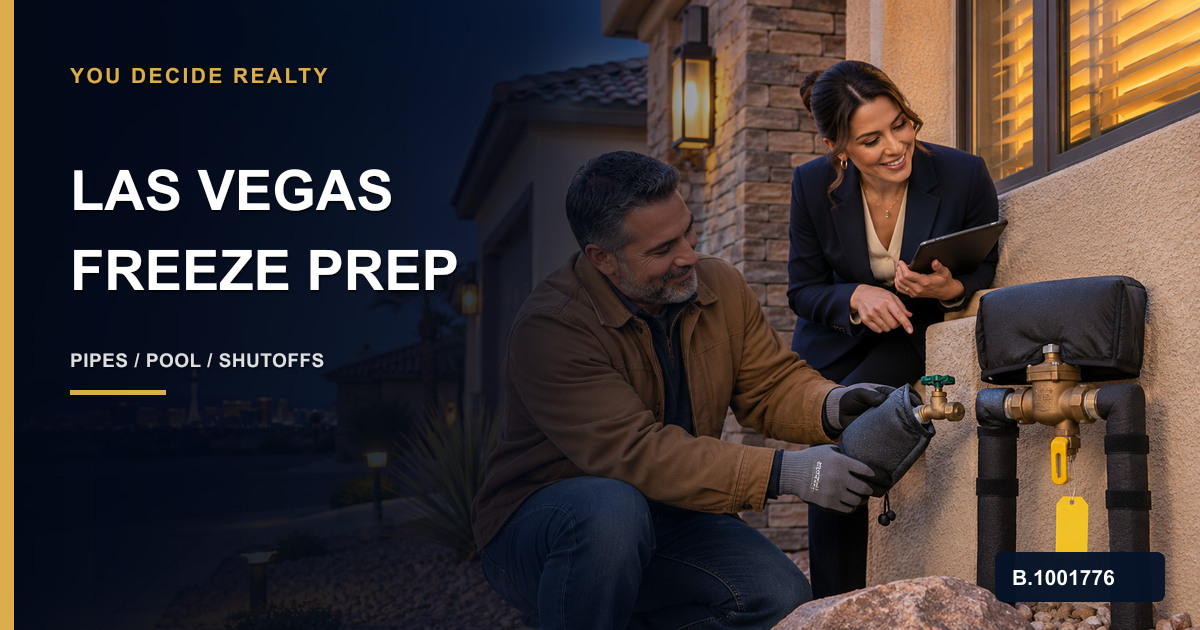
To winterize a house in Las Vegas, focus on the parts of the exact property that are exposed: hoses, hose bibs, irrigation backflow equipment, above-ground pipes, pool plumbing, heat, and the main water shutoff. Clark County says temperatures at or below 32 degrees can freeze pipes in the Las Vegas Valley. LVVWD adds an important local distinction: disconnect and drain hoses, insulate exposed irrigation components, and know the shutoffs, but do not automatically leave indoor or outdoor pipes dripping because typical Valley temperatures generally do not warrant it.
Map the exposed water path
Walk the exterior and identify hose bibs, garden hoses, irrigation backflow devices, above-ground valves, pool pipes, outdoor kitchens, evaporative-cooling lines, and any plumbing in an unconditioned garage or wall. Photograph the current condition and label the correct water and irrigation shutoffs. A warm daytime inspection does not establish how an exposed line will perform during the overnight low.
Use local protection steps
LVVWD recommends disconnecting and draining garden hoses, insulating exposed irrigation pipes, and covering the backflow device without sealing or obstructing its ports. Clark County also recommends wrapping exposed pipes and protecting sprinkler-system elements. Match the material and installation to the component; ask the water provider, pool professional, irrigation contractor, or plumber when the setup is unclear.
Keep pool and heat decisions system-specific
Clark County advises running pool circulation when freezing or near-freezing temperatures are forecast and covering exposed pool pipes. LVVWD also recommends continuous filtration and jet pumps during freezing temperatures, proper water level, leak repair, and consultation with the pool-maintenance company. Follow the equipment manufacturer and qualified service provider rather than applying a single rule to every pool or heating system.
Give a vacant house an owner and response plan
For a listing, second home, inherited property, or home between occupants, record who monitors forecasts, keeps approved heat settings, checks for leaks, receives utility or alarm notices, and can reach the property. Confirm insurance and service requirements directly with the carrier and providers. Vacancy can change coverage, access, response time, and the cost of an unnoticed leak.
Verify the property after the cold night
Check hose bibs, backflow equipment, irrigation valves, pool lines, garage plumbing, ceilings, walls, and meter activity for leaks or damage after the temperature rises. If a pipe appears frozen, use the utility or a qualified plumber for current instructions; do not use an open flame. Preserve photos, invoices, service notes, and any repair evidence for the property file.
FAQ
Can pipes freeze in Las Vegas?
Yes. Clark County says Valley temperatures can drop to 32 degrees or below and can freeze pipes. The risk depends on the forecast and the exact pipe location, exposure, insulation, water, and property conditions.
Should I leave faucets dripping in Las Vegas?
Do not apply that advice automatically. LVVWD says typical Las Vegas Valley temperatures generally are not extreme enough to warrant leaving interior or exterior pipes dripping. Follow current local-provider and qualified-professional guidance for the actual property and forecast.
What should I do first at a vacant Las Vegas house?
Identify the water and irrigation shutoffs, exposed components, heat and pool requirements, monitoring owner, emergency contacts, insurance requirements, and documented check schedule before the next cold night.
Primary sources and limits
- Clark County Fire Department, Cold Weather Winter Safety
- Las Vegas Valley Water District, Watering Tips: Pipes and Hoses
- Nevada Department of Public Safety, Nevada Emergency Mitigation Guide
General education only. An article, forecast, checklist, inspection, photo, service note, referral message, listing record, utility status, property-management record, or qualified-intermediary instruction does not by itself establish property condition, freeze protection, repair completion, insurance coverage, access authority, lease responsibility, code compliance, exchange qualification, license status, or professional acceptance. Verify the exact property, forecast, pipe and irrigation exposure, pool and heating equipment, water and utility controls, vacancy and occupancy status, lease and management duties, access, insurer and lender requirements, manufacturer instructions, qualified contractors, responsible people, exchange structure, taxpayer, use, deadlines, receiving license, secure communication channel, and completion evidence with the applicable utility or water provider, licensed real-estate professionals, property manager, insurer, lender, plumber, pool or irrigation professional, qualified intermediary, CPA, attorney, tax adviser, and other qualified professionals. No individualized legal, tax, lending, insurance, securities, appraisal, inspection, engineering, plumbing, property-management, fair-housing, or investment advice is provided.
Related: applying the Las Vegas winter watering schedule, reviewing moisture evidence after a leak, contact You Decide Realty.