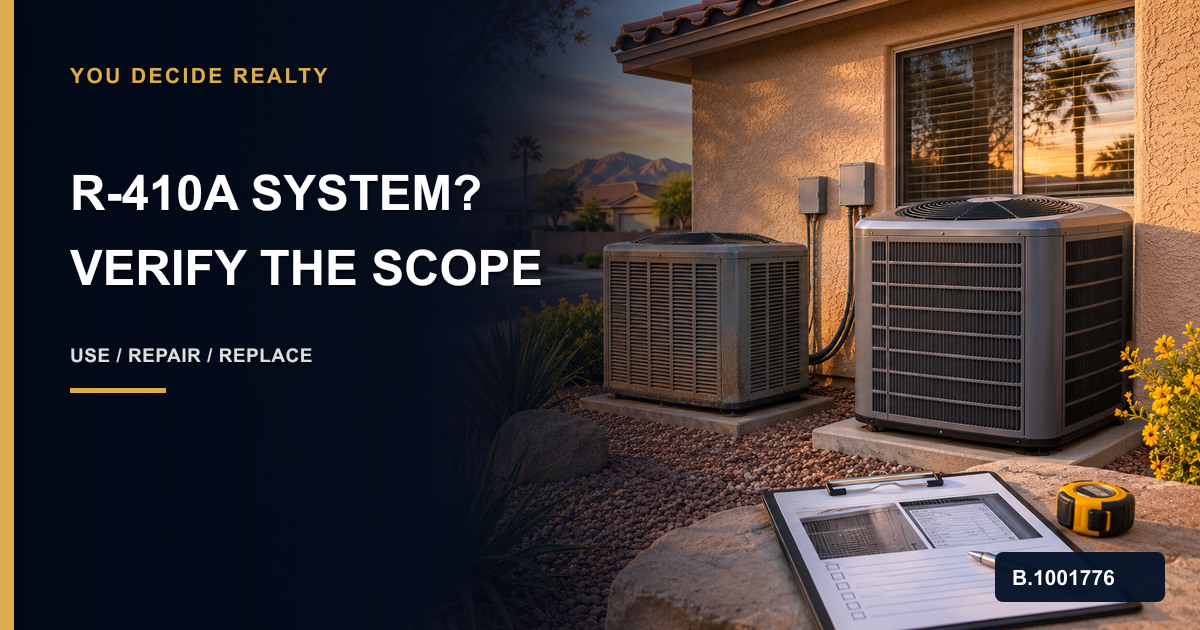
The R-410A transition does not require Nevada homeowners to replace a working air conditioner. The U.S. Environmental Protection Agency says existing systems can continue to be used and repaired throughout their useful life, including replacement of a faulty component with a similar R-410A component. The key 2026 distinction applies when a complete new residential split system is installed: if the outdoor condensing unit and indoor coil are replaced together after January 1, the new system must use refrigerant below the federal global-warming-potential limit. Verify the actual equipment and scope before accepting a phaseout claim.
Read the model labels before deciding anything
Photograph the outdoor condenser and indoor coil or air handler labels. Record manufacturer, model, serial number, refrigerant, manufacture date if available, rated combination, number of systems, thermostat or zoning, and any mismatched components. A listing, seller statement, or service sticker does not establish the complete configuration.
Separate a repair from a complete new system
EPA distinguishes repair of an existing system from installation of a new split system. Replacing one failed component may remain an allowed repair; replacing both the condensing unit and indoor coil together is treated as a new system for this federal program. Do not convert that distinction into a recommendation without written contractor scope, manufacturer compatibility, permit requirements, and the property facts.
Use the inspection for evidence, not a life prediction
Nevada inspection standards require review of readily accessible cooling equipment, distribution, controls, system type, energy source, and number of units. They do not require an inspector to predict future failure or operating cost. Preserve the inspection limits, then use an appropriately licensed HVAC contractor when refrigerant, charge, sealed components, sizing, compatibility, repairability, or replacement design needs specialist review.
Compare repair and replacement as written scopes
For each option, request the exact components, refrigerant, equipment match, permits and inspections, electrical or duct work, controls, access, labor, warranty, exclusions, commissioning, disposal, completion evidence, and total price. Confirm the contractor through the Nevada State Contractors Board and the refrigerant technician qualification through the responsible employer or EPA certification path.
Carry the HVAC facts into the real-estate decision
A seller should disclose known material facts and preserve service and replacement records. A buyer should align inspection and specialist deadlines with the contract. An owner should compare present function, repair evidence, replacement scope, reserves, insurance and lending questions, and the home decision without turning equipment age or refrigerant alone into a value conclusion.
FAQ
Do I have to replace my R-410A air conditioner in 2026?
No federal rule described by EPA requires replacement of a functioning existing system. Existing equipment can continue to be used and repaired, subject to the actual condition, parts, refrigerant, manufacturer guidance, local requirements, and qualified professional advice.
Can an R-410A condenser still be replaced?
EPA says a faulty component, including a condensing unit, may be replaced as a repair to an existing system. The exact component match, labeling, safety, permit, warranty, and system compatibility still require qualified review.
Can a contractor put a new refrigerant into my old system?
Do not assume so. EPA notes that flammable or mildly flammable lower-GWP refrigerants cannot simply be used in equipment that was not designed for them. Follow the manufacturer, code, permit, and qualified-contractor requirements for the exact equipment.
Primary sources and limits
- U.S. EPA, Frequent Questions on the Phasedown of Hydrofluorocarbons
- Nevada Legislature, NAC Chapter 645D — Inspectors of Structures
- Nevada State Contractors Board, Contractor License Search
- U.S. EPA, Section 608 Technician Certification
General education only. A listing, disclosure, equipment label, age, refrigerant, thermostat response, inspection, service record, repair proposal, contractor lookup, permit record, warranty, lease, utility record, referral, or exchange structure does not by itself establish HVAC condition, compatibility, safety, remaining life, operating cost, repairability, replacement need, code compliance, property value, insurance or lending treatment, tax treatment, exchange qualification, professional acceptance, closing, referral payment, or future result. Verify the exact property, system count, indoor and outdoor components, model and serial labels, refrigerant, matched equipment, controls and distribution, access limits, current condition, service and repair history, permits, warranties, manufacturer requirements, inspection and specialist scopes, contractor and technician qualifications, written repair and replacement options, electrical and duct work, leases and responsibility, reserves, financing, insurance, contract and exchange dates, client consent, receiving license and brokerage, accepted owners, and completion evidence with the appropriate inspectors, HVAC contractors, manufacturers, regulators, building offices, property managers, lenders, insurers, qualified intermediaries, CPAs, attorneys, real-estate professionals, and other qualified advisers. No individualized legal, tax, lending, insurance, engineering, HVAC, environmental, securities, appraisal, fair-housing, property-management, or investment advice is provided.
Related: reviewing inspection scope on a Nevada home, reading home-service-contract HVAC limits, contact You Decide Realty.