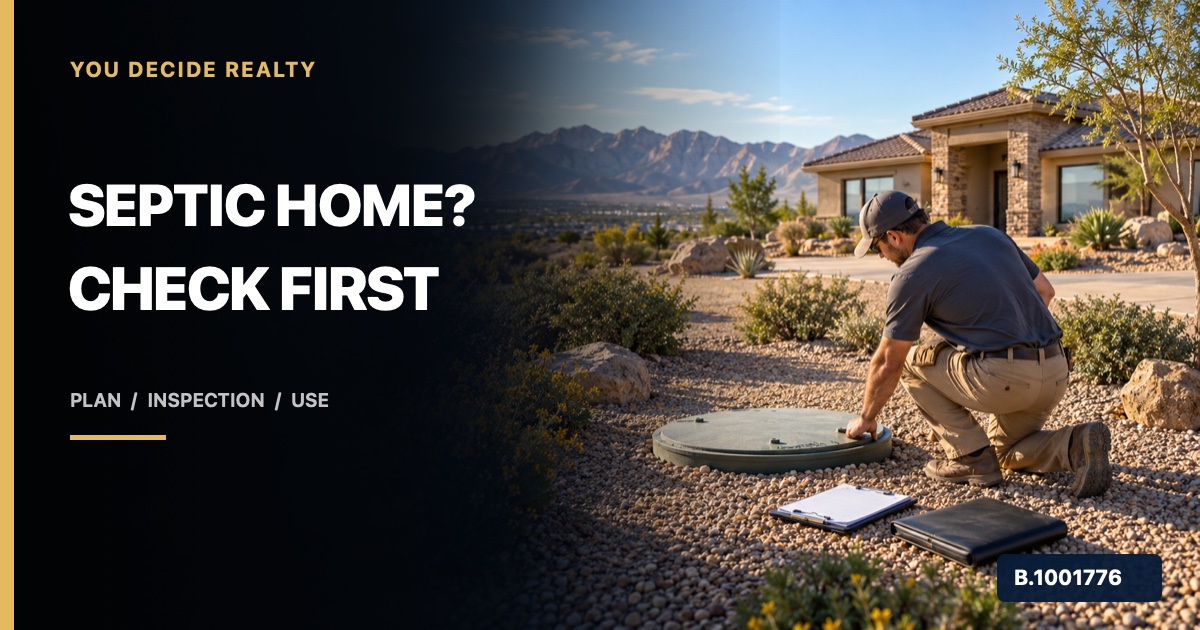
Buying a house with a septic system in Nevada calls for a property-specific review before the contract decision—not an assumption that “septic” is either a problem or a nonissue. Start by confirming that the home actually uses a septic system, locating the available permit or design plan, reviewing age and maintenance records, and arranging a qualified inspection whose scope reaches the tank, components, and drainfield. Then connect the findings to the contract dates, intended use, repair responsibility, and realistic ownership plan.
Confirm the system and its paper trail
Nevada’s residential disclosure framework includes whether a septic tank exists and the property’s water source, but the seller form is not a system certification. Compare the current disclosure with the legal parcel, utility information, available permit or as-built plan, pumping and maintenance history, prior repairs, and the physical location of the tank and drainfield. Southern Nevada Health District provides a plan-search route and a septic/well certification service for real-estate transactions; confirm which process applies to the exact parcel and transaction.
Define the inspection before relying on it
EPA’s homebuyer guidance recommends having a septic system inspected before purchase. A useful scope may include the permit and design record, system age, maintenance file, tank and component condition, sludge and scum levels, leakage or backup signs, pumps and controls when present, and the drainfield. Ask the qualified provider what will be opened, tested, photographed, excluded, or referred to another professional. Do not assume a general home inspection includes this work.
Match the system to the way you will use the home
Household size, water use, a garbage disposal, planned additions, pools, accessory spaces, grading, landscaping, and future remodeling can affect the questions to ask. EPA says the owner is responsible for overall operation, maintenance, repair, or replacement. Before promising a remodel or pricing an unknown as zero, confirm system capacity, setbacks, access, local review, contractor scope, lender and insurance questions, and whether the planned use changes the current approval.
Example: records exist, but they do not match the yard
A buyer receives a septic plan and recent pumping receipt, yet the apparent access cover and landscaping do not align with the drawing. The safe response is not to declare the record wrong or the system defective. The buyer asks the qualified septic provider and responsible public office to reconcile the parcel, plan, components, maintenance history, and present condition before the contract deadline, then decides from the verified result and professional advice.
FAQ
Should a septic system be inspected before buying a Nevada home?
EPA recommends an inspection before purchase. Confirm the property-specific scope, timing, access, and any local or lender requirements with the responsible professionals and public office.
Does the Nevada seller disclosure certify the septic system?
No. It identifies known property conditions within the form’s scope, including whether a septic tank exists, but it does not replace records review or a qualified system inspection.
How often does EPA say septic systems should be inspected and pumped?
EPA gives general guidance of inspection every one to three years and pumping every three to five years, while noting that actual frequency depends on the system, household, water use, solids, and local requirements.
Primary sources and limits
- U.S. EPA, New Homebuyer’s Brochure and Guide to Septic Systems
- U.S. EPA, Frequent Questions on Septic Systems
- Southern Nevada Health District, Sewage/Septic Disposal Systems (ISDS)
- Nevada Administrative Code 113.150, Residential Property Disclosure Form
General education only. A disclosure, plan, permit, pumping receipt, inspection, certification, closing, lease, or exchange structure does not by itself establish that a septic system is correctly located, properly sized, fully functional, compliant, suitable for a planned use, or eligible for Section 1031 treatment. Confirm property-specific septic, health, permit, capacity, inspection, repair, contract, leasing, insurance, lending, legal, tax, and exchange questions with the responsible public offices and qualified professionals. No legal, tax, health, engineering, lending, securities, insurance, or investment advice is provided.
Related: property disclosure and permit-record checks, appraisal and inspection scope, Southern Nevada property search.