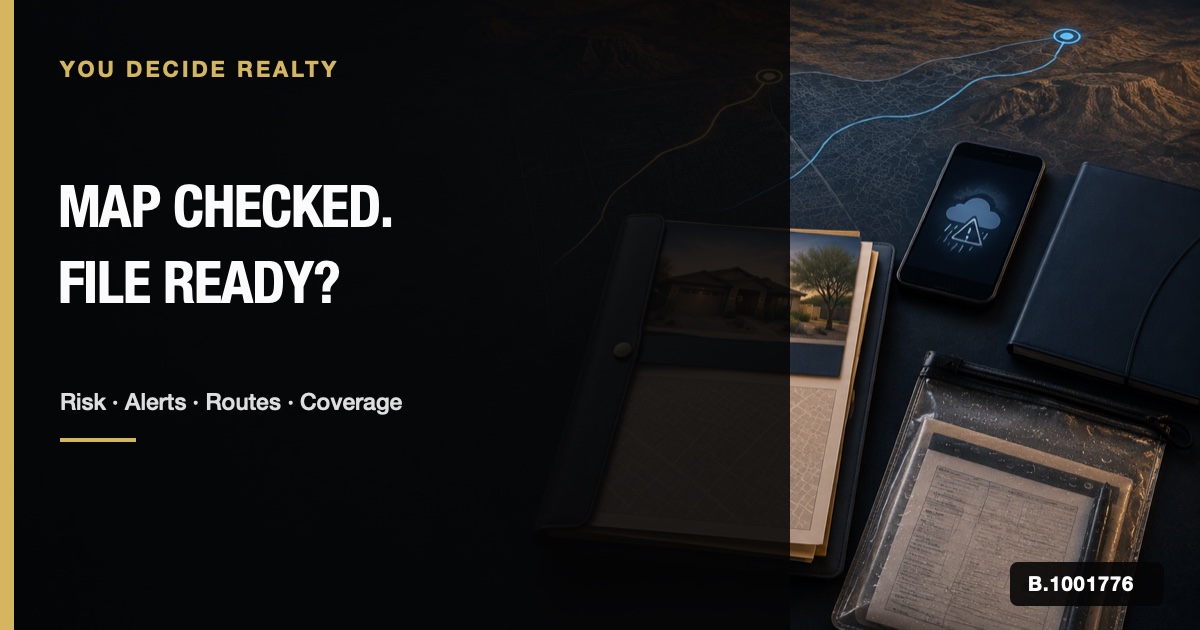
Build a property readiness file before changing price, contingencies, repairs, or closing plans.
1. Record the address-specific sources
Save the current FEMA map result, available seller disclosures, inspection findings, visible drainage observations, applicable association information, and any official records the professional team identifies. Date every item. A listing description or generalized neighborhood statement should not replace current evidence for the exact parcel.
2. Test two safe routes and the alert path
Clark County says never to drive through floodwater and advises moving to higher ground when flooding appears. Mark a primary and backup route for the property, identify the warning systems the household will use, and note where official instructions will come from. A usual commute is not automatically a safe storm route.
3. Verify the coverage question separately
Clark County says standard homeowners policies do not cover flooding and that a flood policy typically takes up to 30 days to become effective. Ask a licensed insurance professional about the actual property, coverage, exclusions, cost, and effective date. Do not treat a loan estimate, prior owner’s policy, or map designation as a current coverage answer.
4. Protect the continuity file
Keep essential originals in a waterproof container and password-protected digital copies in an appropriate secure location. Record who can access the file and who should be contacted after an event. Do not place identification, account numbers, policy records, tax returns, medical information, or other sensitive material in ordinary email or a shared transaction thread.
Example: the map check passed, but the file did not
A buyer reviews the current map and sees no obvious issue. The diligence file still has no backup route, current insurance answer, drainage review, or secure copy of the inspection and policy contacts. The decision is not “safe” or “unsafe” from one map result; it is “four material questions remain open.”
FAQ
Does a FEMA map tell me whether this home will flood?
No. It is one address-specific risk source, not a prediction or guarantee. Use current official information and the relevant inspectors, engineers, insurers, and other professionals.
Can I wait until closing to ask about flood coverage?
That can create an avoidable timing problem. Clark County says a flood policy typically takes up to 30 days to become effective. Ask a licensed insurance professional early about the actual policy and property.
Should I email the readiness file to everyone in the transaction?
No. Share only what is needed through an appropriate secure method. Keep private identity, financial, insurance, tax, and medical records out of ordinary email.
Primary sources and limits
Clark County Fire Department Flash Flood Safety and FEMA-linked preparedness resources. General real-estate education only—not emergency, engineering, inspection, insurance, lending, title, escrow, accounting, legal, tax, securities, or investment advice. Follow official emergency instructions and verify the actual property with qualified professionals.
Build the address-specific readiness file before deciding.
Use current documents and the right professionals before deciding.
Start a conversation